
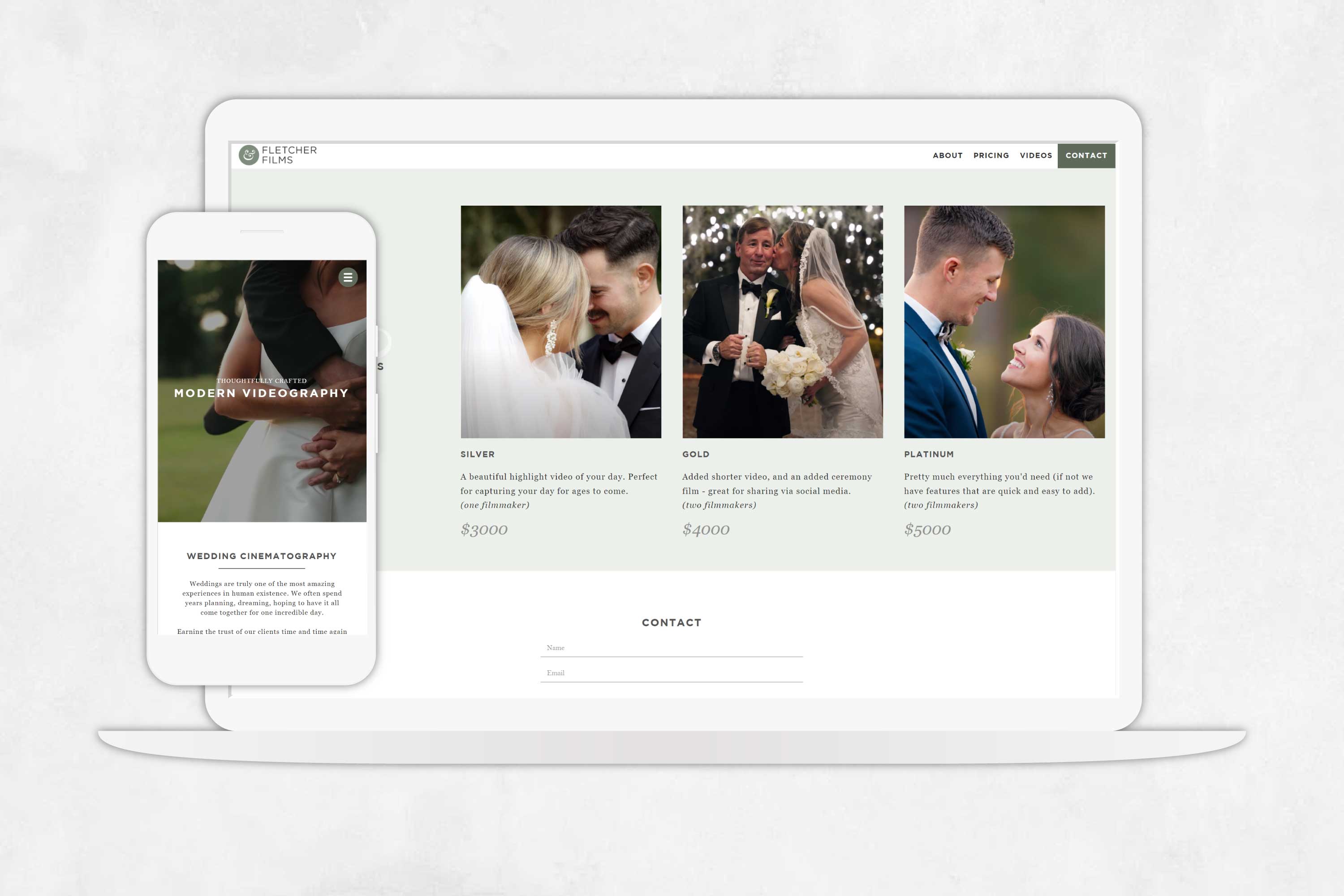
Most business owners assume a high-performing website comes down to design.
Clean layout. Nice colors. Good photos.
And while those things matter, they’re not what actually drives results.
The truth is this: a website can look great and still fail completely when it comes to generating leads.
A high-converting website isn’t built just to impress people. It’s built to guide them.
It takes visitors from curiosity to action—and it does it intentionally.
In this guide, we’ll break down what actually makes a website convert, what most businesses get wrong, and how to turn your site into something that consistently brings in leads.
A conversion happens when someone takes a desired action on your website.
For most small businesses, that means:
A high-converting website is one that consistently turns visitors into those actions.
Not just traffic—but results.
The biggest mistake most businesses make is trying to be clever instead of clear.
When someone lands on your website, they should understand within seconds:
If your homepage says something vague like “Quality You Can Trust,” you’re forcing visitors to figure it out themselves.
And most won’t.
A high-converting website leads with clarity.
Instead of trying to sound impressive, it focuses on being immediately understandable.
Because when people understand quickly, they stay longer.
Your headline is the most important piece of text on your website.
It’s the first thing people read—and often the deciding factor in whether they keep scrolling.
A strong headline clearly states your service and location.
For example:
“Emergency Plumbing Services in Tallahassee, FL”
That’s simple, direct, and effective.
It tells both the visitor and Google exactly what you do.
High-converting websites don’t rely on clever phrases. They rely on clarity and relevance.
One of the biggest reasons websites fail is because they don’t tell visitors what to do next.
People don’t want to guess.
They want direction.
That’s where calls-to-action come in.
A high-converting website makes the next step obvious and easy.
Buttons like:
Should be visible, repeated, and easy to click—especially on mobile.
If your site doesn’t guide users, it loses them.
Before someone contacts you, they need to feel confident in your business.
Your website has to build that trust quickly.
This is where many websites fall short.
They focus on design but forget proof.
High-converting websites include:
These elements reassure visitors that you’re legitimate and capable.
Without trust, people hesitate.
And hesitation kills conversions.
You can have the best messaging in the world, but if your website is slow or hard to use on a phone, it won’t convert.
Most users are browsing on mobile devices.
If your site:
Visitors leave.
And once they leave, they usually don’t come back.
A high-converting website is fast, simple, and easy to use on any device.
Another common mistake is making the website all about the business.
Many sites focus on:
While those things matter, they are not what visitors care about first.
Visitors are thinking about their problem.
They want to know:
High-converting websites speak directly to those concerns.
They position the customer as the focus—and the business as the solution.
A confusing website layout can quietly destroy conversions.
If users can’t find what they need quickly, they leave.
High-converting websites are structured intentionally.
They guide users through a simple flow:
Each section builds on the last, leading naturally to a decision.
There’s no guessing. No searching. No frustration.
Just a clear path forward.
Many business owners underestimate the importance of content.
But content is what tells Google—and your customers—what you actually do.
According to Google’s documentation on how search works, relevance and content clarity play a major role in rankings:
https://developers.google.com/search/docs/fundamentals/how-search-works
A high-converting website includes:
This not only improves SEO but also builds trust with visitors.
People are more likely to choose a business that educates them.
Even a well-designed website won’t convert if the offer is weak.
Your offer reduces hesitation and gives people a reason to act.
Examples of strong offers include:
These remove friction and make it easier for someone to take the next step.
A high-converting website doesn’t just look good—it gives people a reason to say yes.
When your branding, messaging, and information are consistent across your website, it builds confidence.
When they’re inconsistent, it creates doubt.
Consistency means:
This may seem small, but it has a major impact on trust.
And trust directly impacts conversions.
Most websites fail because they focus on appearance instead of performance.
They:
The result is traffic without results.
At the end of the day, a high-converting website does a few things extremely well.
It:
When these elements are in place, your website stops being a digital brochure and starts working like a sales tool.
A high-converting website isn’t about flashy design or trends.
It’s about strategy.
When your site is clear, fast, trustworthy, and built to guide visitors, it becomes one of the most valuable assets your business has.
Because instead of just existing online, it actively helps you grow.
And that’s the difference between a website that looks good—and one that actually works.


.jpg)

.jpg)